
Here the script to generate grant select on all the tables and synonyms.
select 'grant select on Admin.' || object_name || ' to User;'
from user_objects
where object_type in('TABLE','SYNONYM');
Then you have to create a script to run these grant statements at once or you can use PL/SQL as well. Type the following in the SQL prompt.
SQL> spool grant_statements.sql
SQL> set pagesize 0
SQL> set feedback off
SQL> set linesize 300
SQL> set trimout on
SQL> set trimspool on
SQL> select 'grant select on Admin.' || object_name || ' to User;' from user_objects where object_type in('TABLE','SYNONYM')
/
SQL> spool off
And you have got the script file you can run it.
OR
You can run the following PL/SQL block (Run as admin user).
BEGIN
  FOR s IN (SELECT *
              FROM user_objects where object_type in('TABLE','SYNONYM'))
  LOOP
    EXECUTE IMMEDIATE  'grant select on admin.' || s.object_name || ' to user';
  END LOOP;
END;
You can’t grant privileges that only apply to one other schema. You would have to grant ANY — even if temporarily, e.g. during the creation/modification of the main A schema, to reduce the security impact — and create all the synonyms in the other B user’s schema while you had the privileges. Otherwise user B would have to create the synonyms itself; or user A could create public synonyms.
As an alternative to having any synonyms, you could have user B switch to schema A with:
alter session set current_schema = A;
They could then refer to A’s objects without having to prefix them with the schema name, though they then couldn’t see any objects in their own schema without prefixing those instead — it doesn’t sound like B will have objects but hard to tell.
You can also automate that schema switch via a logon trigger:
create or replace trigger ramread_logon_trigger
after logon on database
begin
  if user = 'B' then
    execute immediate 'alter session set current_schema = A';
  end if;
end;
/
If you actually have multiple users you can use a role instead, and switch schema for any user that has that role, by testing with dbms_session.is_role_enabled. The same role could be granted the necessary permissions to access A’s objects, which you will need to grant somehow — a synonym doesn’t itself give any access privileges.
Выберите * из dba_synonyms // запрос, * Отражает Возврат к базе данных всех полей
// Авторизоваться полномочия создавать синонимы для пользователей HRPUSER
grant create any synonym to hrpuser
// Удаляет Common синонимов EF_COST_WBWORKNUMDATA
drop public synonym EF_COST_WBWORKNUMDATA
/ / Создать EF_IF_V_OPTTTTTTTTTTTTTTYPE публичного синонима для EF_IF_V_OPTTYPE таблицы YTHIS пользователей.
create public synonym EF_IF_V_optTYPE for ytis. EF_IF_V_optTYPE
// Контрольная работа
 // Дайте права доступа запрос для пользователя HRPUSER, EF_IF_V_OPTTYPE стол

grant select on EF_IF_V_optTYPE to hrpuser
Сначала подключитесь к управляемому серверу Oracle, затем подключитесь к самой системной учетной записи Oracle.
Системный счет является одним из немногих предопределенных учетных записей управления автоматически при установке Oracle. Система может выполнять большинство задач управления, давайте посмотрим на управление актами.
Создать пользователя
После подключения вы можете генерировать новую учетную запись с помощью команды создания пользователя.
Создание Books_admin (Имя пользователя) Книги (Указано) Выявленные 123456 (Password)
Здесь мы просто создаем пароль учетной записи, аутентифицированные указанными учетными записями koots_admin.
Уполномоченное заявление
Books_admin После создания новой учетной записи мы теперь можем использовать оператор Гранта для добавления разрешений на вашу учетную запись. Грант — это очень мощное утверждение, существует много возможных вариантов, но основная функция заключается в управлении разрешениями всей базы данных двух пользователей и ролей.
Роль
Как правило, вы должны сначала назначить разрешения пользователям, прикрепляя вашу учетную запись к различным символам, начиная об соединении из роли:
Грант Connect (Имя роли) в Books_Admin (Имя пользователя);
В некоторых случаях, чтобы создать более мощные пользователи, вы также можете рассмотреть возможность добавления роли ресурсов (позволяя пользователям создавать типы наименований в пользовательские режимы) или даже роли DBA, что позволяет пользователям не только создавать пользовательские типы именования, но и Изменить и уничтожать они тоже.
Грант Connect, Resource, АБД Books_Admin (имя пользователя);
Назначьте разрешения
Далее необходимо убедиться, что пользователь фактически подключен к базе данных и использует разрешения [создание сеансов]. Мы также объединяем его с [всеми разрешениями], чтобы использовать предоставление любых привилегий.
Грант Создать сессию books_admin; // пользователи Grant Books_admin создавать разрешение сессии, а именно привилегию Войти
 Жаловать привилегию Books_Admin (Имя пользователя);
Нам также необходимо убедиться, что наши новые пользователи выделены в системе, чтобы фактически создавать или изменить таблицы и данные, поэтому мы предоставим табличное пространство это:
разрешения пользователя // Грант с использованием табличного
 Грант неограниченных табличного Books_Admin (Имя пользователя)
Разрешения
Несмотря на то, что в более новой версии Oracle обычно нет необходимости, некоторые более старые установки могут потребовать вручную указать новый пользовательский доступ к определенной таблице архитектуры и базы данных.
Например, если мы надеемся, что наши пользователи koots_Admin имеют возможности выполнения, обновлять, вставлять и удалять в таблице функций книг, мы можем сделать следующее утверждение гранта:
grant select,insert,update,delete on books to books_admin

 Grant Create Table To Zhangsan // Предоставить разрешение на создание таблицы

 Grante Drop Table Для Zhangsan; // разрешение Грант для удаления таблицы

 Грант ВСТАВИТЬ ТАБЛИЦА ДЛЯ ZHANGSAN; // Права доступа к Вставить таблицу

 Грант Обновить таблицу Для Zhangsan; // Изменение разрешений таблицы

 Даруй все общественности; // Это более важно, предоставляются все разрешения (все) для всех пользователей (общественности)
Oralce более строгим к управлению разрешениями, и есть также по умолчанию доступа друг к другу по умолчанию.
Грант SELECT, на TABLENAME к Zhangsan; // пользователи Грант ZHANGSAN Просмотр разрешения для указанной таблицы

 Грант Падение на TABLENAME к zhangsan; // разрешение Грант для удаления таблицы

 Грант ВСТАВИТЬ на TABLENAME для Zhangsan // Предоставьте права доступа вставки

 Грант обновление на имя_таблицы к zhangsan; // Грант разрешения для изменения таблицы

grant insert(id) on tablename to zhangsan;

 Грант Update (идентификатор) на имя_таблицы к zhangsan; // вставка Grant и разрешение модификации указать поле конкретного, обратите внимание, только INSERT и UPDATE

 Грант оповещение всех таблицы в zhangsan; // Grant право доступ чеки пользователя ZhangSan
Обновление разрешений
Основной синтаксис с грантом, ключевые слова отзывы
Просмотр разрешений
Выберите * из user_sys_privs; // Просмотр текущей собственности пользователя

 Выберите * от user_tab_privs / / Просмотр разрешений таблицы, используемые
Таблица операций Таблица пользователя
select * from zhangsan.tablename
Роль
Набор ролей — это разрешения, вы можете предоставить пользователю роль
Создание роли myrole; // Создать роль

 Грант Создать сессию myrole // предоставить разрешения на сессии в Myrole

 Грант myrole в zhangsan / / награждён роль Zhangsan пользователя Myrole

 Падение роли myrole; // Удаление роли
Передача разрешений
То есть пользователь грантов разрешений B, B может предоставлять разрешения операции C, следующим образом:
Грант оповещение Таблица на TABLENAME To Zhangsan с администратором Option; // Ключевое слово с правами администратора Option

 Грант оповещение Таблица на TABLENAME для Zhangsan с опцией грантов; // Ключевое слово с опцией субсидии эффектом и администратором Похожим
Синоним (синхронимы)
Синоним Oracle (синхронимы) понимается из буквально значений, и функциональность вида аналогична, что является сопоставлением отношений.
В управлении Oracle управляется своим способом пользователя, то есть, если мы хотим использовать базу данных, мы должны иметь разрешения, но если другие предотвращают наши разрешения, мы также можем управлять базой данных. Прежде чем мы должны авторизовать название таблицы Наберите имя владельца таблицы, так что это более неприятно, что мы должны делать? Создайте Oracle SynoMy! Таким образом, мы можем использовать синоним, чтобы использовать таблицу напрямую.
Существует таблица Table1 под USER1, теперь USER2 хочет использовать татер1
grant select on table1 to user2;
select * from  user1.table1 ;
create public synonym table1 for user1.table1
 Выберите * из table1; // не нужно вводить имя владельца таблицы
Синоним
Функция управления синонимом предоставляется в базе данных Oracle. Синонимы являются псевдонимами для схем базы данных, которые часто используются для упрощения доступа к объекту и улучшению безопасности доступа к объекту. При использовании синонимов база данных Oracle переводит его во имя соответствующей схемы объекта.
Аналогичный, синонимНе занимайте фактическое пространство для хранения, только определение синонимов сохраняется в словаре данныхОтказ Большинство объектов базы данных в базе данных Oracle, такие как таблицы, представления, последовательности, хранимые процедуры, пакеты и т. Д., Администраторы базы данных могут определять синонимы на основе фактической ситуации.
Классификация Oracle SynoMys
У Oracle синонимы имеют два типа, которые являются общимиОбщественный синонимиЧастный синоним
1) Общие синонимы Oracle:
Он принадлежит общественности специальной группы пользователей. Как следует из названия,Все пользователи в базе данных могут использовать общие синонимыОтказ Общий синоним часто используется для обозначения некоторых общих объектов базы данных, которые часто нужно ссылаться.
2) Частные синонимы Oracle:
Это соответствует общественному синониму.Он сделан созданием своих пользователейОтказ Конечно, этот синоним создан, может пройтиУправляйте авторизацией, имеют ли другие пользователи, имеют право использовать свои собственные частные синонимы。
Создать синоним
1) Создание грамматики для мужского оракула синоним:
Создать [Публичное] Синонимное имя синонима для [Имя пользователя.] ObjectName;
create public synonym table_name for user.table_name;
2) Создание синоним объекта удаленной базы данных
Если вы хотите создать синоним вкладки в удаленной базе данных, вам необходимо создать ссылку базы данных для расширения доступа, затем создать базу данных со следующим оператором: создать синоним таблицы_NAME для table_name @ db_link;
Синоним имеет преимущество: сохранение большого количества пространств баз данных, нет никакой разницы в той же таблице для разных пользователей; сфера использования расширенной базы данных может достичь бесшовного взаимодействия между различными пользователями базы данных; синонимы могут быть созданы в разных базах данных. На сервере подключение реализуется через сеть.
Изучение ссылки
Oracle Создание пользователей и настройки разрешений и синонимы
Концепция Oracle Synonyms (синхронимы), создайте вид Удалить и ссылку Oracle DB
In this article, I’ll explain all you need to know about Synonyms.
What is an Oracle Synonym?
A synonym is an object in a database that represents an alternative name for other objects, such as tables, views, sequences, and stored procedures.
Why Would you Use a Synonym?
Why would you want to create a synonym? Why not just rename the original object?
The main reason is to simplify the user access to an object. You can provide access to an object to a user using a synonym, and you don’t need to worry about who owns the original object.
It also simplifies access to objects, especially when multiple databases and schemas are involved.
The examples later in this article will demonstrate this further.
Oracle Synonym vs View
As mentioned above, a synonym is an alias or alternative name for an object.
How is this different from a view?
A view object is an SQL query that is saved and run when other queries use that view. It works like a table.
Why would you use a synonym instead of a view?
Well, a view contains more complicated logic. If you just want to provide an alias for a table or another object, you can use a synonym. If you want to SELECT data from a table and use WHERE conditions or other logic, then a view is better.
Also, a view can only be created on objects with data, such as tables and other views. Synonyms can be created on tables, views, sequences, stored procedures, and more.
They both have their advantages, but they should only be used when appropriate.
Difference Between Public and Private Synonym in Oracle
There are two types of synonyms that can be created on an Oracle database: public and private.
- Public synonym: can be accessed by any user on the database. The user who creates the synonym it does not own it – it’s owned by the PUBLIC user group.
- Private synonym: can only be accessed by the person who created the synonym. This user is also the owner. The synonym name must be unique within the schema.
What happens if you have a public synonym with the same name as an existing object? Or a private synonym?
This is a valid scenario, and Oracle has rules on which order they are processed in. Just like how, in mathematics, the multiplication and division are performed before the addition and subtraction, Oracle has an order in the way that the objects are looked up.
The order of precedence for objects and synonyms is:
- Local schema object. Oracle will look at the user’s schema for the object name.
- Private synonym. If a schema object is not found, Oracle will look in the private synonyms for the user.
- Public synonym. If a private synonym is not found, Oracle will look in the public synonyms.
This is how public synonyms and private synonyms compare:
| Criteria | Public | Private |
| Who owns it? | PUBLIC user group | The user that created it |
| Scope of the unique name | All database objects | The schema of the user who created it |
| Who can use it? | All database users | Only the user who created it |
| Order of precedence | Third, after schema objects and private synonyms | Second, after schema objects |
Generally, it’s a good idea to avoid creating public synonyms. Sure, they can make management a bit easier, but they can pose a security risk and can make development harder, because there’s an object that exists and available to all users.
How to Create a Synonym in Oracle
To create a synonym in Oracle (either private or public), we use the CREATE SYNONYM command.
The syntax is:
CREATE [OR REPLACE] [PUBLIC] SYNONYM [schema.] synonym_name
FOR [schema.] object_name [@dblink_name];
The parameters for this function are:
- OR REPLACE: This is optional and allows you to replace an existing synonym name, instead of dropping it and recreating it.
- PUBLIC: Use the PUBLIC keyword to create a public synonym. If this is omitted, a private synonym is created.
- schema: This is optional and is the name of the schema you want to create the synonym in. If this is omitted, the synonym is created in your own schema. If you are creating a PUBLIC synonym, you cannot specify a schema.
- synonym_name: The name of the new synonym that is being created. It should be 30 characters or less. I say should, because names longer than 30 characters can be created and dropped, but they are transformed into a shorter string for storage.
- FOR schema: The schema is optional, but specifies the schema name that the object exists in.
- object_name: The name of the object that the synonym will relate to.
- dblink_name: This is the name of the database link if it is required.
A synonym can be created on the following types of objects:
- table
- view
- stored procedure
- function
- package
- sequence
- materialised view
- synonym
- java class schema object
- user-defined object
Let’s see some examples of creating a synonym.
Example 1 – Create private synonym
CREATE SYNONYM emp
FOR hr.employees;
This creates a new private synonym called emp, which refers to the employees object in the hr schema.
Example 2 – Create public synonym
CREATE PUBLIC SYNONYM cust
FOR sales.customers;
This will create a new public synonym for the customer object in the sales schema. All users can query the cust synonym and access the sales.customers table (if they have access to the underlying sales.customers table).
Example 3 – Same name
CREATE SYNONYM product
FOR sales.product;
This will create a private synonym. Notice that both objects have the same name. A query such as this will look for the local object first (which does not exist), and then the synonym:
SELECT * FROM product;However, querying on the original object will also access that object:
SELECT * FROM sales.product;If a new table was created in the user’s current schema called product, then this query will look at that table instead of the synonym:
SELECT * FROM product;How to Drop a Synonym in Oracle
To remove a synonym that already exists, you can drop it from the database.
The syntax for doing this is:
DROP [PUBLIC] SYNONYM [schema.] synonym_name [FORCE];The parameters are:
- PUBLIC: specifies whether you are dropping a private or public synonym. If you’re not sure what type your synonym is, then see the section below on finding all synonyms in a database.
- schema: This is the name of the schema that your synonym exists on. This is only needed if you are dropping a private schema.
- synonym_name: The name of the synonym to be dropped.
- FORCE: This will force Oracle to drop the synonym even if it has dependencies.
Let’s see some examples.
Example 1 – Drop a public synonym
DROP PUBLIC SYNONYM emp;This will drop the public synonym emp.
Example 2 – Drop a private synonym
DROP SYNONYM customer;This will drop the private synonym called customer.
Example 3 – Drop a synonym with a schema
DROP SYNONYM hr.emp;This will drop the synonym emp that exists in the hr schema.
How to Find All Synonyms In the Database
So you’ve created some synonyms, or your database already has some. How can you check the synonyms in Oracle? How do you know if a synonym is public or private?
There is no “oracle list synonyms” command, but you can query some database views to find this information:
- all_synonyms: View synonyms available to the current user.
- dba_synonyms: View all synonyms in the database.
- user_synonyms: Private synonyms owned by the current user.
To find a list of synonyms on the database, you can run these queries.
SELECT * FROM all_synonyms;This shows us a list of all synonyms available to the current user.
A query on the dba_synonyms view will show us all synonyms in the database:
SELECT * FROM dba_synonyms;And finally, a query on user_synonyms will show us all private synonyms owned by the current user:
SELECT * FROM user_synonyms;Conclusion
So, in summary, a synonym is a database object that allows you to create an alias to another object. They are helpful for simplifying your queries and improving the way access to data and objects is handled.
Lastly, if you enjoy the information and career advice I’ve been providing, sign up to my newsletter below to stay up-to-date on my articles. You’ll also receive a fantastic bonus. Thanks!
Summary: in this tutorial, you will learn how to use the Oracle CREATE SYNONYM statement to create an alternative name for a database object such as a table, view, sequence, procedure, stored function, and materialized view.
Introduction to Oracle CREATE SYNONYM statement
The CREATE SYNONYM statement allows you to create a synonym which is an alternative name for a database object such as a table, view, sequence, procedure, stored function, and materialized view.
Here is the basic syntax of creating a new synonym:
Code language: SQL (Structured Query Language) (sql)
CREATE [OR REPLACE] [PUBLIC] SYNONYM schema.synonym_name FOR schema.object;
In this syntax:
- First, specify the name of the synonym and its schema. If you skip the schema, Oracle will create the synonym in your own schema.
- Second, specify the object for which you want to create the synonym after the
FORkeyword. Note that the schema object (schema.object) cannot be contained in a package. - Third, use the
OR REPLACEoption if you want to re-create the synonym if it already exists. In case the synonym does not exist, theOR REPLACEhas no effect. - Fourth, use the
PUBLICkeyword to create a public synonym which is a synonym that will be accessible to all users. Note that users must have sufficient privileges on the underlying objects to use the public synonyms.
Once you define a synonym for an object, you can reference it in the SQL statements such as the SELECT, INSERT, UPDATE, and DELETE statement.
Note that you can create a synonym for a table or a view that doesn’t exist. However, the target table or view must be available at the time you use the synonym. In addition, synonyms share the same namespace as tables or views, therefore, you cannot create a synonym which has the same name as a table or a view that already exists in the same schema.
This example uses the CREATE SYNONYM statement to create a synonym for the inventories table from the sample database:
Code language: SQL (Structured Query Language) (sql)
CREATE SYNONYM stocks FOR inventories;
If you use SQL Developer, you can view the newly created synonym in under the Synonym nodes as shown in the following picture:
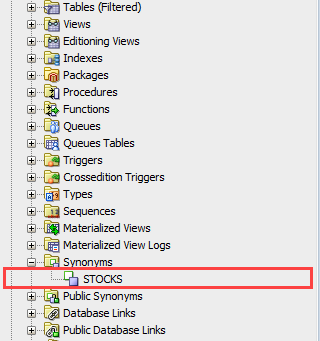
Now, you can use the stocks synonym instead of the inventories table in the query like the following:
Code language: SQL (Structured Query Language) (sql)
SELECT * FROM stocks;
Advantages of Oracle synonyms
First, synonyms allow you to change complicated and lengthy names by simplified aliases. It is very helpful if you work with the legacy systems. So instead of referring a table like human_resources.employee_locations, you can use offices.
Second, synonyms can help backward compatibility for the legacy applications. For example, you rename a table but do not want to affect the current applications that currently use the table. To keep the applications working properly, you can create a synonym that has the name the same as the old name of the table.
Third, synonyms help moving objects between schemas, even databases, without breaking the existing code.
In this tutorial, you have learned how to use the Oracle CREATE SYNONYM statement to create an alternative name for a database object.
Was this tutorial helpful?